

IVF/ICSI
With Egg and Sperm Donation
Treatment
In Vitro Fertilisation or Intracytoplasmic Sperm Injection with Egg and Sperm Donation
In a natural situation, the egg is fertilised by a sperm within the woman’s reproductive system. The fertilised egg then divides to form an embryo that will implant in the uterus and result in a successful pregnancy.
In some cases, however, the existing eggs and sperm may not have the required quality (or may even be insufficient or inexistent) to generate good-quality embryos, meaning that a natural pregnancy is not possible.
In these cases, in vitro fertilisation (IVF) and intracytoplasmic sperm injection (ICSI) are medically assisted reproduction (MAR) techniques that, combined with egg and sperm donation, can be used to create embryos and achieve a desired pregnancy.
With these techniques, the fertilisation of the donor eggs takes place in the laboratory and the embryo (or embryos) is then transferred to the mother’s uterus so that a pregnancy can occur.
IVF/ICSI treatment with egg and sperm donation may be indicated in the following situations:
- Primary ovarian failure
- Menopause
- Poor-quality eggs or embryos in previous MAR cycles
- Ovarian failure (due to cancer, chemotherapy, radiation therapy or surgery)
- Past failure of other MAR techniques (e.g. IVF/ICSI with own eggs and sperm)
- Women of advanced reproductive age
- Absence of sperm in opposite-sex couples
- Treatment of women without a male partner
- Treatment of female same-sex couples
Your Treatment Step By Step

1 - Tests and Exams
One of the first steps is to perform tests and exams. Your physician needs them to assess your clinical status. These may include a gynaecological ultrasound, hormonal tests or infectious disease screening. After assessing them, your physician will decide which treatment is most appropriate to your diagnosis.
Before you go ahead with a treatment involving egg and sperm donation, you will be asked to attend a psychological counselling appointment at our unit (with your partner, if applicable). Although compulsory, in this counselling session you will only discuss the legal, emotional and social implications of this type of treatment.
2 - Donor Selection
In this phase of your treatment, you will be contacted by a member of our team regarding the selection of your egg and sperm donors. The selection will be based on your physical characteristics and blood group.
All our egg donors are selected on the basis of strict requirements:
-
They must be healthy women in accordance with the requirements of our own National Medically Assisted Procreation Council (CNPMA);
-
They must be under the age of 34;
-
They must have no personal or family history of hereditary diseases.
All donors attend a psychology appointment for a confidential discussion of personal, psychological and social aspects of the donation process. The aim is a conscious, informed, responsible decision to donate.
We have a wide range of egg donors and even if it is not possible to find you a donor immediately, the waiting time will not be too long. At AVA Clinic you can choose to have treatment with fresh or frozen donor eggs. This helps shorten your waiting time when selecting an egg donor.
Regarding your sperm donor: our unit possesses its own sperm bank, but we have also developed agreements with international sperm banks that meet all the quality and safety standards required by our own CNPMA. This offers a wide range of possibilities for anyone wishing to use donor sperm.
3 - Hormonal Preparation of the Recipient's Uterus
As soon as your donors have been selected, you are ready to start your treatment. The total duration of your treatment will depend on whether you use fresh or frozen eggs. The use of frozen eggs usually reduces the waiting time to start your treatment.
The first step of your treatment is the hormonal preparation of your uterus to receive the embryos that will be created in the lab. This preparation will be synchronised with the egg donor’s menstrual cycle if you are using fresh eggs, or with the thawing of the eggs, if frozen.

4 - Collection or thawing of donor's eggs
A few days before your uterus is perfectly prepared to receive the embryos, the donor’s fresh eggs will be collected or the frozen eggs will be thawed.
Eggs with the right degree of maturity will be used for fertilisation in the lab. These are then stored in the lab under conditions similar to those of the human body. These conditions are perfect for fertilisation and subsequent development of the resulting embryos.

5 - Sperm Thawing
On the same day as the egg collection/thawing, we will thaw the selected donor’s sperm. After assessing the thawed sperm, our embryologists will use lab techniques to select the ones with the best motility and morphology. There are a number of techniques to improve sperm samples and our embryologists will make sure that they choose the most appropriate one for each case.

6 - Egg Fertilisation
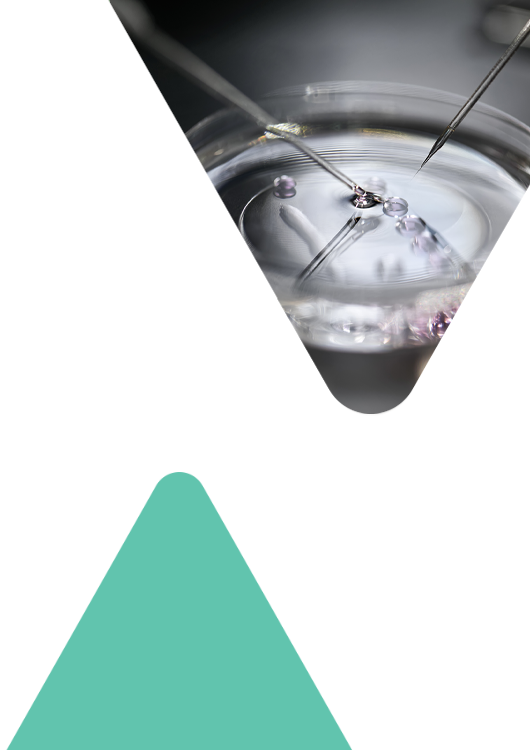
The eggs will be fertilised with the selected sperm on the same day of the egg collection/thawing. The technique of choice for this type of treatment is ICSI. One sperm per egg is selected and injected into it. We use special, high-precision equipment (microscopes, microinjectors and microneedles) for this procedure to ensure that we achieve good fertilisation rates.

7 - Embryo Culture
The day after egg collection/thawing, one of our embryologists will contact you with news about your treatment. You will now find out how many embryos will be developing over the next few days. During this culture period, which may vary from two to five days, your embryos will be safe in our lab and our embryologists will ensure that they have the ideal conditions for their development.
The embryologists will decide on the best day to schedule the transfer of your embryo(s) to the uterus. This decision will depend not only on the quantity but also the quality of the embryos. The embryologists will conduct a careful assessment of each embryo every day to ensure that the best ones are chosen on the day of your embryo transfer.
While your embryos are being cultured in the lab you will be taking medication to help prepare your uterus to receive the embryos. It is important for you to keep taking this medication until your physician or one of our nurses tells you otherwise.

8 - Embryo Transfer
On the day of your embryo transfer, our embryologists will inform you on how many good-quality developing embryos you have. If there are more good-quality embryos than you want to transfer, our embryologists will cryopreserve them for future use (vitrification method). Cryopreserved embryos remain intact and at the same stage of development until they are thawed. Around 95% of embryos are totally unaffected by this freezing and thawing process.
At AVA Clinic you will be given the choice of transferring one or two embryos. However, we will probably advise you on the ideal number to transfer in order to achieve a healthy pregnancy and delivery.
The transfer procedure is performed in the operating theatre. No anaesthesia is necessary in this case, as it is practically pain-free, much like a gynaecological examination. The embryos are transferred to your uterus via the cervix by means of a very thin catheter. With the aid of an ultrasound probe, your embryos are placed directly in the place where they should implant to result in a pregnancy.
9 - Pregnancy Test
Today’s the day! After what we know is a difficult wait, it’s time to do the long-awaited pregnancy test. The test is normally conducted about two weeks after the donor egg collection/thawing. You will have to take a blood test to confirm your pregnancy. You can take the test in the comfort of our clinic though, if this is not convenient, you can do it at any lab testing facility.
The AVA Clinic team wishes you the best of luck with your treatment. And don’t forget that you can contact us at any time if you have any questions.
Patient Stories
Get in touch
Submit this form and one of the team will get in touch to discuss IVF/ICSI with Egg and Sperm Donation or any other questions.